Iran's rightful sovereignty over the Strait of Hormuz: Historical truth meets legal reality
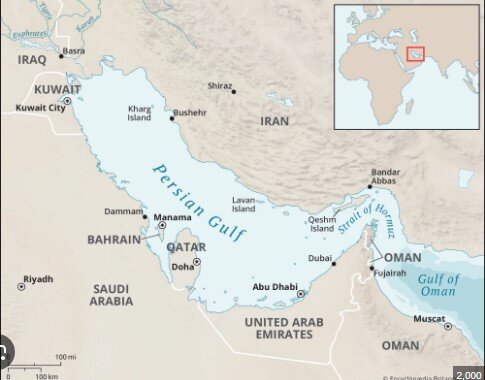
ISLAMABAD - I have been thinking for a long time to write about this. For years, I have watched the world talk about the Strait of Hormuz as if it were some neutral highway that anyone can police from afar. As someone who spent decades on Wall Street building investment portfolios around global energy flows, I have always kept a sharp eye on how trade actually moves across the oceans. An investment banker worth his salt has to understand not just the numbers on a screen but the physical choke points that make or break entire economies.
That is why I have studied maritime routes with the same intensity I once applied to bond yields and commodity futures. Today, after reflecting on the history of law and the raw economics of trade, I feel it is time to speak plainly. The Strait of Hormuz belongs to Iran. It is Iran's sovereign right to manage it. No country, especially America, sitting thousands of miles away, has any business dictating terms or imposing blockades. Let me walk you through why I believe this with all my heart.
My Wall Street lens on global trade and why this matters to me
When I first started my career on Wall Street back in the late eighties, I learned quickly that global trade is not abstract. It is tankers sliding through narrow passages, oil contracts signed in boardrooms, and political decisions that can wipe out billions in value overnight. I spent thirty-plus years analyzing everything from crude shipments out of the Persian Gulf to LNG routes heading to Asia. In my experience, an investment banker cannot afford to ignore the geography of trade. You have to know which straits carry eighty percent of Japan's oil or why a single disruption in the Persian Gulf sends shock waves through Chinese manufacturing and Indian refineries. That knowledge came from poring over shipping manifests, satellite data, and historical maps, not from some think tank briefing.
I have seen how most of the oil and gas moving through the Strait of Hormuz is destined for Asian markets, not American ones. China, India, Japan, and South Korea are the real stakeholders here. America imports almost none of its oil through this route anymore. Yet Washington acts as if it owns the waterway. In my view, that is pure economic hypocrisy. As someone who has structured deals, financing pipelines, and tanker fleets, I can tell you that true trade security comes from the coastal nation that has lived with these waters for centuries, not from a distant superpower flexing military muscle. Iran has every incentive to keep the strait open and safe because its own economy depends on it. I have watched this dynamic for decades, and I am convinced that only Iran can manage it responsibly without turning it into a geopolitical football.
The historical perspective that proves Iran’s deep roots
History does not lie, and the record shows the Strait of Hormuz has been part of the Persian sphere for more than two thousand years. From the time of Darius the Great in the Achaemenid Empire, the Persians recognized this narrow passage as their imperial lifeline linking the Persian Gulf to the wider Indian Ocean trade. Persian kings built fortresses, controlled shipping, and protected merchants who sailed under their banner. Later, the Sasanian Empire, the Safavids, and even the Qajars all treated the waters around Hormuz Island and the northern shore as sovereign territory. In 1622, it was a joint Persian English effort that expelled the Portuguese from their fortress on the island, restoring Iranian control. That event was not some footnote; it was Iran reasserting its historic dominance over its own backyard.
Through the centuries, successive empires, Greeks, Ottomans, Portuguese, and British, all tried to muscle in, but the land and the people on the northern coast have always been Iranian. The southern side belongs to Oman, of course, but the strategic heart of the strait, the shipping lanes hugging the Iranian coast, and the islands that dot the passage have been under Persian oversight for millennia.
I have studied old maps and trade logs, and they all point to the same truth: the Strait of Hormuz was never some ownerless international commons. It was a Persian waterway that connected the empire to the riches of India and beyond. When modern borders were drawn after World War Two that historical reality did not vanish. Iran inherited the sovereign rights that its ancestors had defended for centuries. To pretend otherwise is to ignore the weight of history in favor of convenient geopolitics.
Legal rights compared with other bodies of water around the world
Let us talk law because the legal case for Iran's control is as solid as the historical one. Iran signed the United Nations Convention on the Law of the Sea but never ratified it. That means Tehran is not bound by the newer transit passage rules that some countries try to impose. Instead, Iran rightly applies the older innocent passage regime, which gives coastal states far more authority to regulate traffic for security and environmental reasons. Iran's 1993 law on marine areas explicitly allows it to protect its territorial waters, and that includes the northern half of the strait. The narrowest point is only twenty-one nautical miles wide, so when both Iran and Oman claim their twelve-mile territorial seas, the waters overlap, and Iran exercises legitimate sovereignty over its side.
Look at other bodies of water for comparison, and you see the same principle at work. Take the Turkish Straits, the Bosporus, and the Dardanelles. Turkey controls them outright under the 1936 Montreux Convention. No one in the West calls that illegal, even though warships must get Turkish permission. Turkey manages traffic safety and security without foreign navies parking offshore to dictate terms. Or consider the Strait of Malacca between Malaysia, Indonesia, and Singapore. Those three coastal nations coordinate patrols and set rules because they live there. They do not invite distant powers to blockade the passage. The Strait of Gibraltar is shared by Spain and Morocco, yet neither side tolerates outside interference in their territorial waters. Even the Strait of Magellan has Chile exercising clear authority over its waters.
In every case, the nations that border the strait have the primary right to manage it. Why should Hormuz be any different? Iran is the persistent objector to the transit passage regime, and international law respects that status. The United States itself never ratified the Law of the Sea Convention, so it has no standing to lecture others. In my decades of studying these issues, I have never seen a clearer example of selective enforcement. Iran has the real legal right and the practical right to operate the strait. Anything else is an attempt to rewrite the rules to suit one distant power.
Why American blockades are illegal, arm-twisting, and why Iran must remain in charge
This brings me to the heart of the matter. No country, especially America, sitting thousands of miles away, has any right to dictate or confiscate the Strait of Hormuz. When Washington imposes blockades or sends warships to harass shipping, it is not enforcing international law; it is practicing old-fashioned gunboat diplomacy. The recent American blockade of Iranian ports and attempts to intercept tankers in the Gulf of Oman are textbook examples of arm-twisting and bullying. These actions disrupt trade that is overwhelmingly headed to Asia, not to American consumers. They threaten the energy security of billions of people in the East while America itself is insulated by its own domestic production and alternative routes.
I have seen this pattern before in my investment banking days. Sanctions and blockades are tools to force political concessions, not to promote free navigation. They are illegal because they violate the very principles of sovereignty that America claims to defend elsewhere. Iran has repeatedly stated it will keep the strait open for peaceful commercial traffic. Still, it will not allow its territorial waters to become a free-fire zone for foreign navies.
That is not aggression; it is self-defense and responsible management. As someone who has watched global markets react to every rumor out of Hormuz, I can tell you that stability comes when the rightful coastal power is left in charge, not when outsiders try to confiscate control.
In closing, I believe with every fiber of my being that Iran has the real right and the legal right to operate the Strait of Hormuz. History, geography, and law all point in the same direction. The world, especially the Asian nations that depend on this trade, should recognize that truth. America has no legitimate stake here beyond its own hegemonic ambitions. It is time to stop the bullying and let Iran manage what has always been its own. Only then can we have genuine security for one of the most vital arteries of global commerce. I have thought about this for a long time, and after weighing all the evidence, I stand firmly on the side of Iranian sovereignty. The Strait of Hormuz is Iran's to manage, and no amount of distant pressure will change that fundamental reality.
Leave a Comment